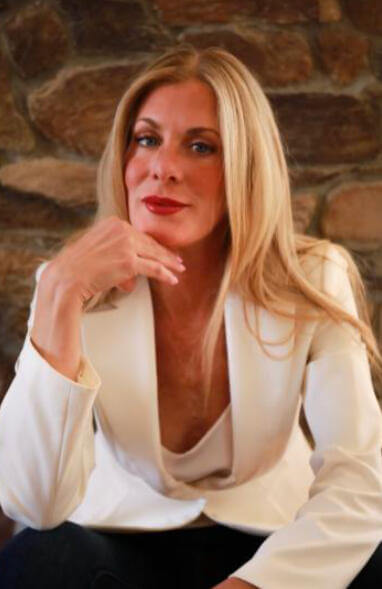
Ep.156— This Is Not My Life: Laura Burkett on Resilience, Sisterhood & Starting Over
Podcast: Play in new window | Download
The Middle Is Where the Story Is
There are moments in life when the only thing you can think is:
This is not my life.
This cannot be happening.
For Laura Burkett, those words became much more than a reaction to one terrible moment. They followed her through loss, grief, unexpected turns, career changes, illness, and eventually into the writing of her memoir, This Is Not My Life: A Memoir of Sisterhood, Suspicion, and Starting Over.
But somewhere along the way, the meaning changed.
“This is not my life” stopped being about rejecting what had happened and started becoming a declaration that what happened to her did not get to determine everything that came next.
As Laura put it during our conversation, her life became what she created from the tragedy forward.
And THAT is where our conversation went.
Not into a perfectly packaged story about overcoming adversity.
Into the messy middle.
We Need to Stop Making “Strong” the Only Option
One part of my conversation with Laura hit especially close to home.
We talked about how quickly we call women strong when they’re going through something difficult.
“You’re so strong.”
“You’re a fighter.”
“You’ve got this.”
We mean well.
But sometimes those words create an expectation the person never asked for.
Because what happens on the day she doesn’t feel strong?
What if she’s scared?
Angry?
Exhausted?
What if today simply sucks?
Laura said something I haven’t stopped thinking about: resilience and endurance aren’t the same thing.
Endurance is sometimes simply surviving because you have no other option. Resilience comes later when you begin asking, What am I going to do with what happened to me?
That’s a very different definition of strength.
It leaves room for the crying.
The anger.
The lying-on-the-kitchen-floor moments.
The days when you absolutely do not have an inspirational lesson to share.
Don’t Skip the Middle
We love transformation stories.
Here’s who I was.
Something terrible happened.
And look at me now.
Except that’s rarely how transformation actually works.
Laura said something during our conversation that perfectly captured it: “the middle’s where the meat is.”
You can’t jump from being curled up on the kitchen floor crying to publishing a book and pretend nothing happened between those two moments.
The middle is where your narrative begins changing.
It’s where you question things.
Where you grieve.
Where you get angry.
Where you learn.
Where you change your mind.
Where you discover pieces of yourself you didn’t know existed.
And sometimes, years later, you finally understand what that version of yourself was trying to teach you.
Sometimes Vulnerability Creates the Connection We Thought We Didn’t Have
For years, Laura believed one of the biggest lies many of us tell ourselves when we’re going through something difficult:
I’m alone.
Publishing her story required her to put parts of herself into the world that she had previously kept safely inside her own home.
That was terrifying.
But then something unexpected happened.
Other women started telling Laura their stories.
Women she had known for years shared experiences she’d never known about.
Loss.
Grief.
Illness.
Regret.
Suddenly, she could see that while their circumstances weren’t identical, they weren’t nearly as alone as they had believed.
That may be one of the most beautiful parts of vulnerability.
When one person is brave enough to say, this happened to me, someone else finally feels safe enough to whisper, me too.
Your Story Doesn’t Have to Die With You
Laura’s mother ultimately became one of the reasons she decided it was time to publish her book.
Her mother was a writer, too.
But her stories lived on pieces of paper and notes.
After receiving a leukemia diagnosis and being given only a short time to live, Laura watched her mother wrestle with the things she hadn’t done.
That regret changed Laura.
She realized she had slowly shifted into survival mode rather than actually living.
Later in our conversation, Laura made a case for something I wholeheartedly believe:
Write your story.
It doesn’t necessarily have to become a bestselling book.
Write it on Substack.
Put it in a journal.
Create the document.
Tell the stories.
Leave something behind that allows the people you love to someday understand not just what you did, but who you were.
Laura wishes she had more of her mother’s story today. That’s why she encourages other people not to let theirs disappear with them.
And Then Laura Planted One Final Seed
I end episodes of The Seed by asking my guests what final seed they want to plant for the person listening.
Laura’s answer was simple:
“If you are not afraid, you’re not growing.”
And then she added another piece:
“Do not become comfortable in comfort because then you are just existing. You’re not living.”
Laura knows something about fear.
She knows something about loss.
She knows something about starting over.
And she also knows that courage doesn’t mean standing on the other side pretending none of it hurt.
Maybe courage is allowing ourselves to tell the whole story.
The good.
The awful.
The funny.
The uncomfortable.
And especially the messy middle.
Because perhaps the goal isn’t to get our old lives back after something changes us.
Maybe it’s deciding what we’re going to create from here.